Programs for care settings
A complete approach to doll therapy.
Choose education, supplies, and implementation support designed for hospitals, senior communities, and family caregivers.
Choose your setting
Support that fits how you provide care.
Primary program
Hospitals
Structured support for leadership, nursing teams, and frontline staff caring for patients.
- Full annual program with doll therapy supplies, starting at: $8,498
- Initial program access without supplies, starting at: $4,998
- Training videos and tip sheets
- Implementation and clinical practice guidance
- Support for storage, education, and workflow planning
Both options include implementation support. Hospitals that already have dolls can choose the program without supplies.
Request Hospital InformationMemory care and assisted living communities
A practical framework for memory care, assisted living, and long term care teams supporting residents.
- Full annual program with doll therapy supplies, starting at: $3,498
- Initial program access without supplies, starting at: $1,998
- Staff and family education
- Resources for respectful daily use
- Implementation guidance from Angie
Both options include implementation support. Communities that already have dolls can choose the program without supplies.
Request Community InformationFamily caregivers
A complete kit with guidance for introducing doll therapy at home.
- Individual kit for $148
- Education and fall prevention resources
- United States shipping included
View the Family KitTwo ways to get started
Choose the support your team needs.
The full program includes doll therapy supplies, education, and implementation support. If your organization sources its own dolls, Angie can provide the program content and guidance to help your team introduce and sustain doll therapy.
Research informed care
Evidence from real hospital implementation.
In a multisite acute care implementation, 159 patients received doll therapy. Among those patients, 81.8 percent showed documented improvement in neuropsychiatric symptoms.
Nurses described the intervention as minimally time consuming, and 84.8 percent recommended hospital adoption.
Fall findings remain exploratory evidence. These findings suggest that doll therapy may contribute to a reduction in fall risk by helping address underlying fall risk factors in this patient population. Further research is needed to better understand the relationship. Responses vary by person and setting.
Family and staff experiences
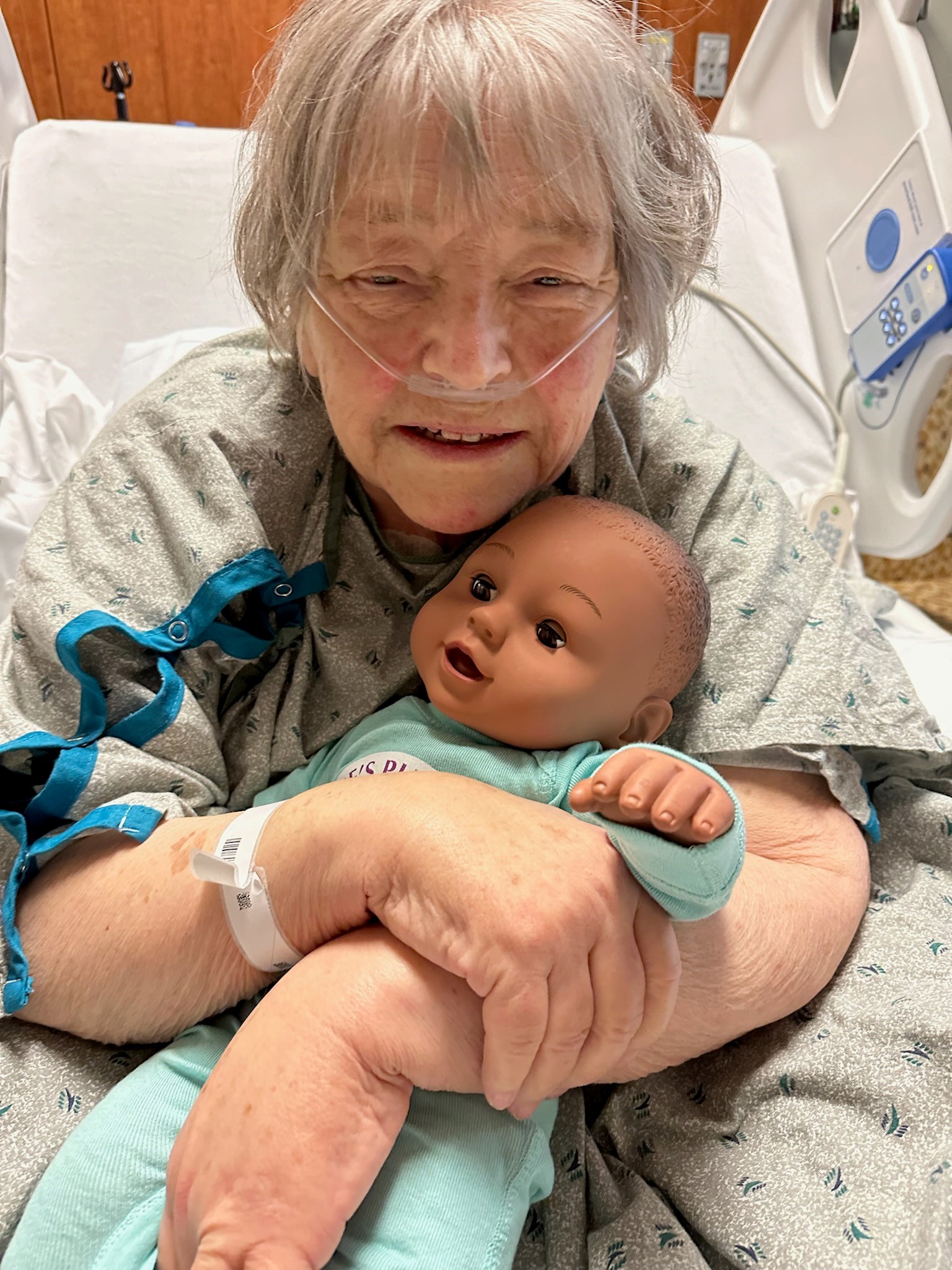
Comfort families could see.
These approved stories describe individual experiences with Angie’s Purpose. Every person may respond differently.
Practical education
Support from introduction through implementation.
Program resources include training videos, educational tip sheets, family handouts, clinical and operational guidance, fall prevention resources, and implementation support. Angie helps teams plan education, supplies, storage, and continued use in everyday care.
Request a Program Quote